Prayer journaling
Write prayers honestly, name the people and concerns you are carrying, and return later to remember how God sustained you through the season.
A Scripture-first guide and private app
Christian journaling is the practice of writing prayers, Scripture reflections, questions, gratitude and records of God’s faithfulness. It can help you slow down, remember and respond to God with greater attention.
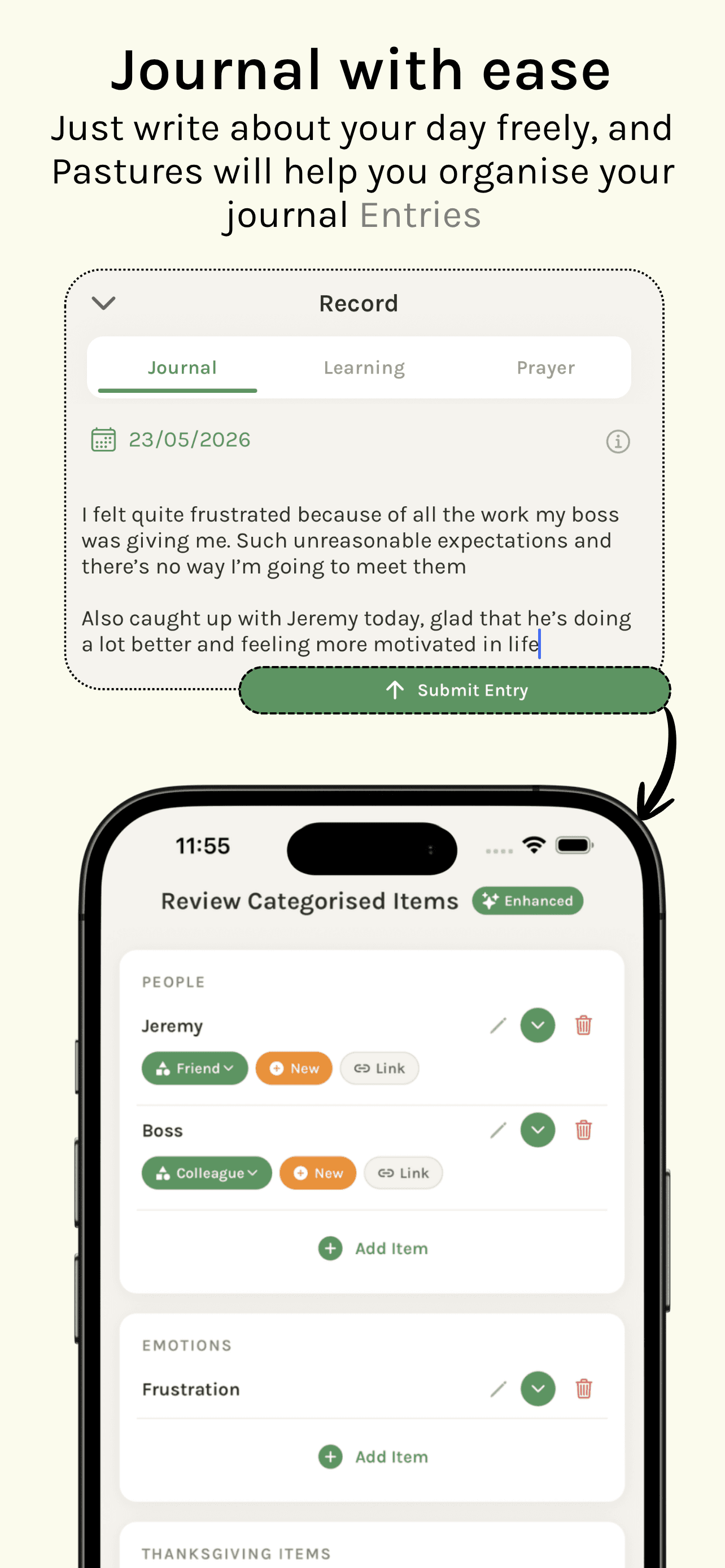
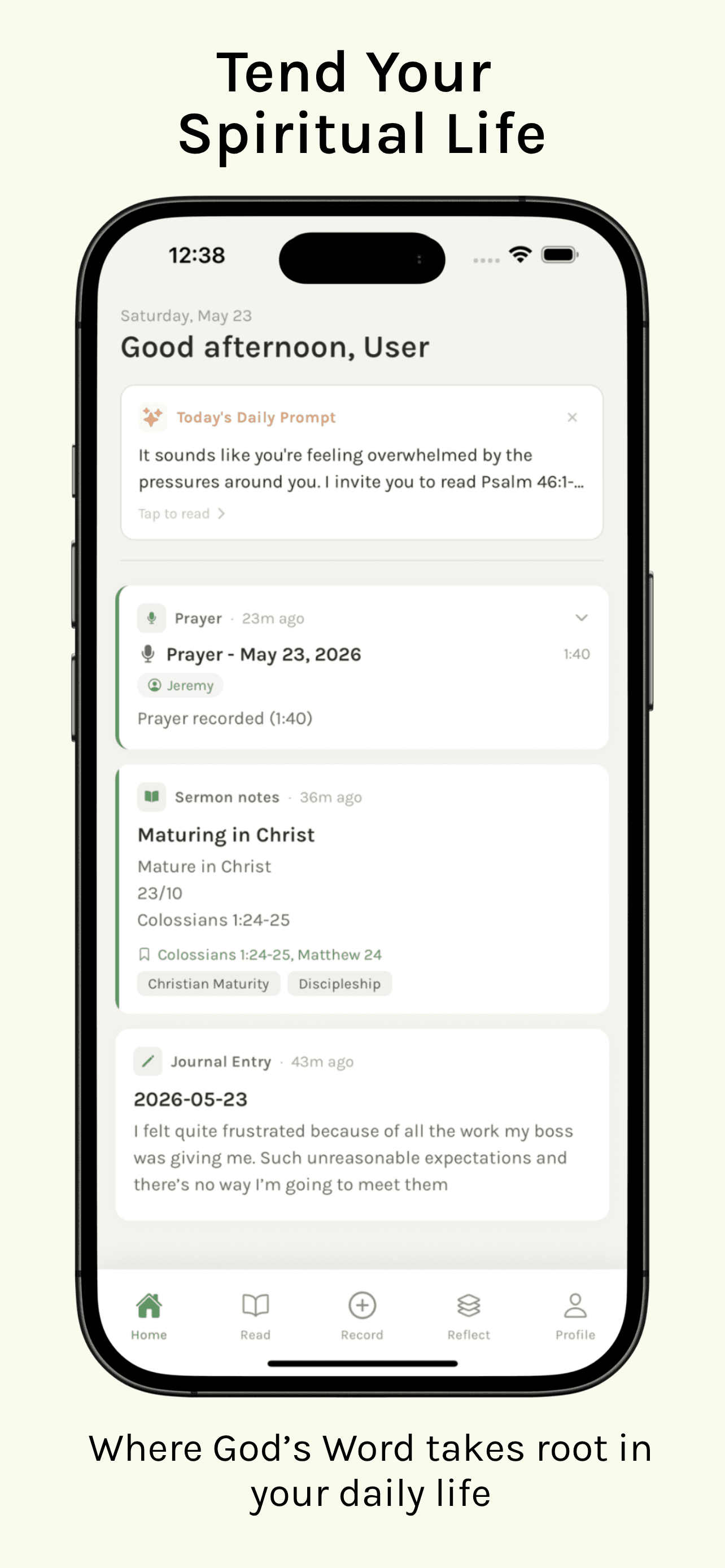
This guide will help you begin simply. If you prefer to journal digitally, Pastures brings your entries, prayer, Bible reading and sermon notes into one connected place. Thoughtful AI helps organise what you record and bring relevant parts of the story back into view.
What it is
Christian journaling is not about producing beautiful pages or proving that you are growing. It creates room to bring your actual life before God: gratitude and grief, clarity and confusion, answered prayer and long seasons of waiting.
Scripture does not command Christians to keep a journal. A journal also does not make every thought spiritually authoritative. Its value is simpler. Writing can help us remember, examine our hearts, form honest prayers and return to the truth of God’s Word.
The journal serves your walk with Christ. It does not replace the Bible, the work of the Holy Spirit, wise counsel or life in the local church.
Four useful forms
You do not need to choose one rigid method. Different seasons may call for different kinds of attention.
Write prayers honestly, name the people and concerns you are carrying, and return later to remember how God sustained you through the season.
Begin with the passage in context. Record what it reveals about God, what it exposes in you, and how its truth may shape your response.
Capture the teaching that matters, connect it to its biblical passage, and write one question or action you want to carry into the week.
Keep a record of answered prayer, ordinary provision, difficult lessons and reasons for thanksgiving so they are not lost to time.
Begin without overcomplicating it
A faithful practice can begin with one passage, one honest paragraph and one prayer. These five steps are enough to start.
Step 1
Five honest minutes after reading Scripture can be more sustainable than an elaborate routine you rarely begin. Choose a time that already has a natural place in your week.
Step 2
Write about the conversation, worry, joy, disappointment or question that is already occupying your attention. You do not need to sound impressive or spiritual.
Step 3
Turn what you have written into prayer. Ask what is true of God, where repentance or gratitude may be needed, and what you need to entrust to Him.
Step 4
Let Scripture correct, comfort and direct your reflection. Read verses in their context instead of treating a single line as a private message detached from the rest of the Bible.
Step 5
The goal is not a perfect streak. Return when you can. Over time, revisiting earlier entries can help you remember prayer, recognise patterns and give thanks for God’s faithfulness.
When the page feels blank
A prompt should open a door, not force an answer. Choose the question that meets the season you are actually in.
A Christian journaling app
Paper journals are meaningful, but they can be difficult to search and easy to leave unopened. Pastures is designed for Christians who want a private digital record that can grow with them through different seasons.
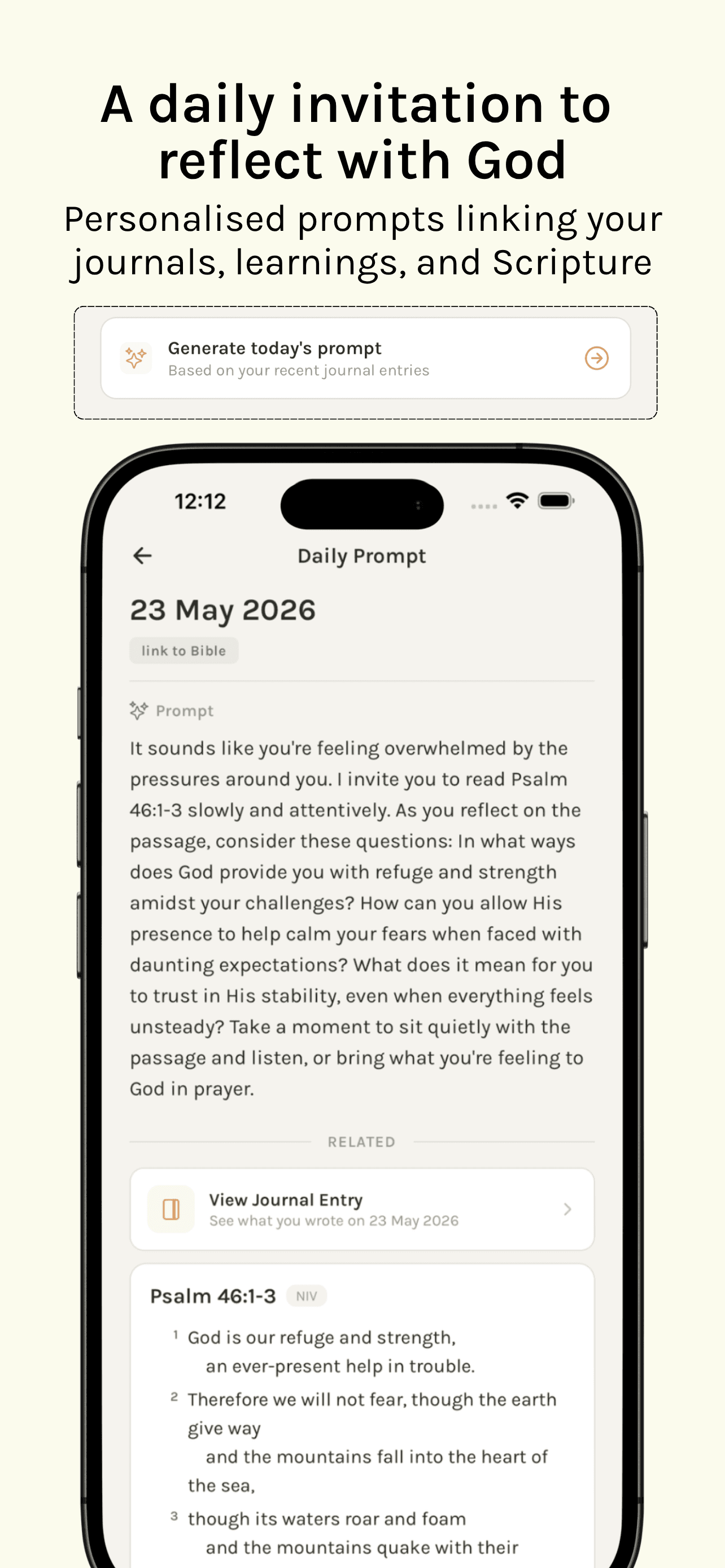
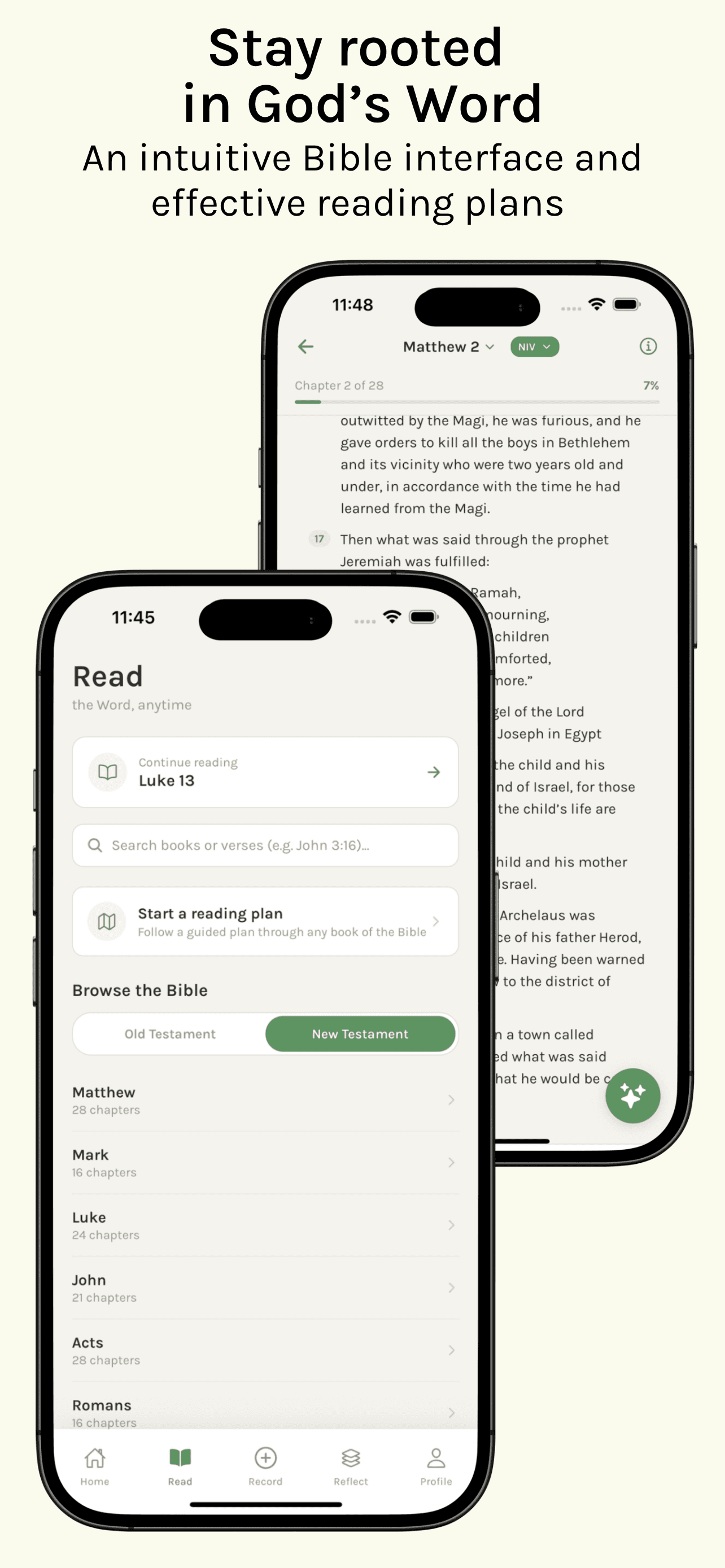
Record journal entries, prayers, sermon notes and Bible-study learnings. Return to them through search and Journey timelines. Read Scripture in the same place and use prompts to begin when words are difficult to find.
The AI in Pastures works with the activity you choose to record. It can organise journal entries into Life Journeys and help reconnect today’s reflection with an earlier prayer, entry or learning that might otherwise remain forgotten.
Thoughtful AI for Christian journaling
A growing journal contains more than isolated entries. It holds relationships, prayers, lessons, struggles and signs of grace across months or years. The challenge is being able to find and revisit those threads when they matter.
Pastures uses AI as quiet infrastructure for that work. It helps organise what you have already recorded and surfaces meaningful connections for you to consider. You remain the person praying, reading, discerning and responding.
Pastures can categorise what you write into Journeys for people, prayer requests, thanksgiving, emotions, growth areas and other recurring parts of life. You can review what it identifies instead of manually tagging every entry.
A reflection does not have to remain isolated on the day it was written. Pastures can surface an earlier entry, prayer or learning when it may help you notice continuity across a longer season.
Daily reflections can draw on activity inside the app to suggest Scripture, reconnect you with previous content or learnings, and offer a question for further prayer and journaling.

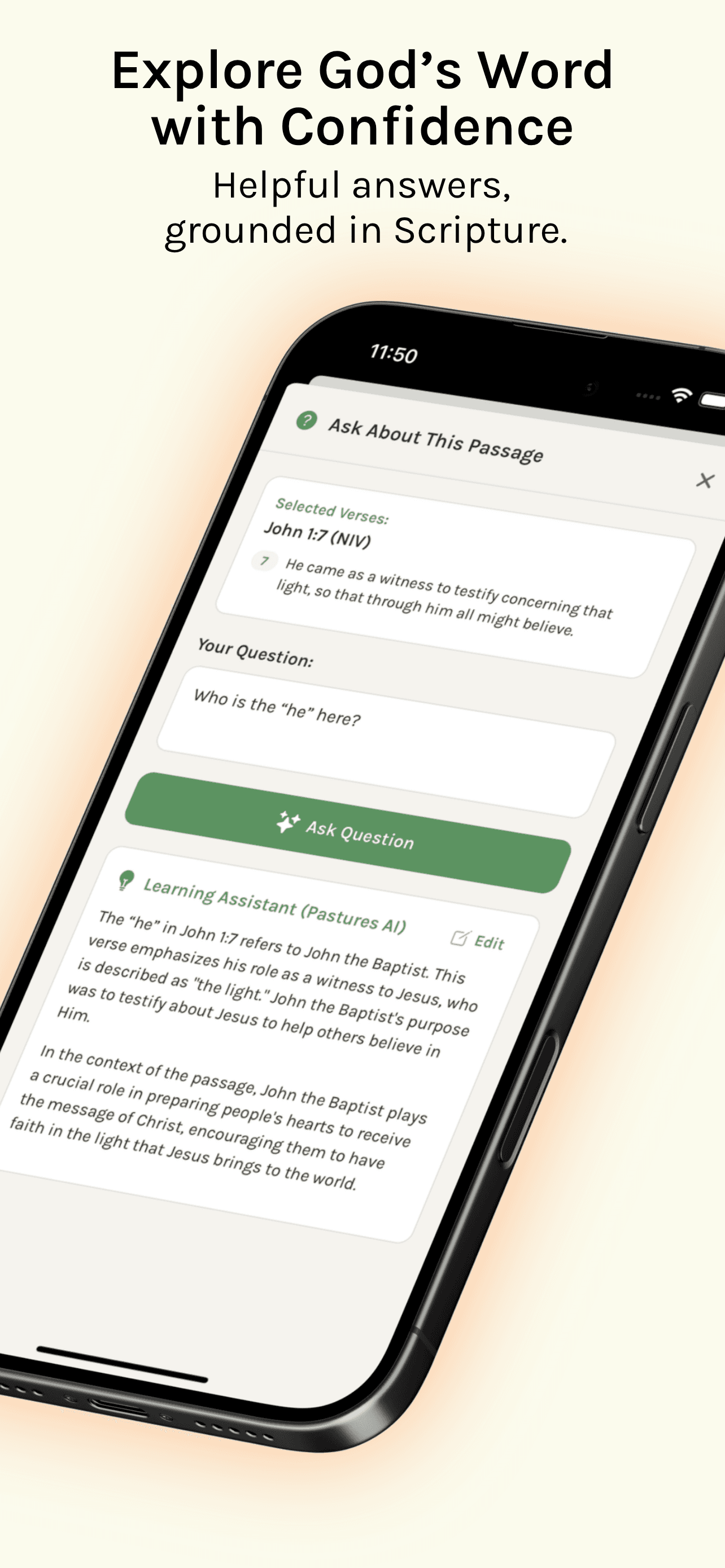
Pastures does not ask AI to tell you what God is saying or to make spiritual decisions for you. A suggested connection is an invitation to look again, not a verdict. Scripture remains the authority, reflection remains yours, and discernment belongs in prayer and Christian community.
Read more about where AI fits in PasturesCommon questions
Christian journaling is the practice of writing prayers, Scripture reflections, questions, gratitude and records of God’s faithfulness in order to pay closer attention to life with God. It is not commanded by Scripture, but many Christians find it useful for remembrance, honest prayer and thoughtful reflection.
You can write prayers, reflections on Scripture, sermon notes, gratitude, questions, struggles, answered prayers and what you are learning about God. A short and honest entry is enough. Christian journaling does not require polished writing.
The terms overlap, but they can describe different practices. Bible journaling often focuses on notes, lettering, drawing or reflection alongside the biblical text. Christian journaling is broader and may also include prayer, daily life, relationships, gratitude and remembrance.
Yes. Paper can be quiet and tactile, while a Christian journaling app can make entries searchable, connect them to Scripture and help you return to earlier prayers or themes. The best medium is the one that helps you reflect honestly and return faithfully.
Pastures uses AI to organise journal entries into Life Journeys and to make reflection more connected. It can surface earlier entries or learnings, recommend relevant Scripture and create daily reflection prompts based on activity in the app. The AI supports attention and remembrance. It does not replace Scripture, the Holy Spirit, prayer, discernment or Christian community.
No. A journal is a tool. It should support prayer, engagement with Scripture and life in Christian community, not replace them. Personal impressions should remain open to correction by Scripture and wise believers.
Continue exploring
A practical guide to Scripture integration, privacy, reflection and choosing a tool that serves your walk with Christ.
Explore how journaling can support remembrance, honest prayer, Scripture meditation and gratitude.
See how Pastures organises journal entries into meaningful timelines without requiring manual tagging.
Begin with one honest entry
Keep your prayers, Scripture reflections, sermon notes and everyday moments together in a private record you can return to over time.